
Table Games Guide: How to Play, Rules, Strategy & Tips
Understand how online table games work — blackjack, roulette, baccarat, poker, and more. Learn the rules, house edge, strategy basics, Philippine regulation, and responsible play.
Table games are among the oldest and most respected forms of casino entertainment. From blackjack and roulette to baccarat and poker, these games have been played in physical casinos for centuries and are now widely available on regulated online platforms.
Unlike slot machines, table games often involve an element of player decision-making. This means that understanding the rules, the house edge, and basic strategy can affect how long your bankroll lasts and how enjoyable the experience is.
For players in the Philippines, online table games are available on regulated platforms through both RNG (Random Number Generator) versions and live dealer versions. Each format offers a different experience, and understanding the differences can help you choose the right game for your preferences.
This guide explains how table games work, the most common types, the concept of house edge, basic strategies, regulation in the Philippines, and why responsible play matters.
1. What Are Table Games?
Table games are casino games traditionally played on a table, where players make bets against the house or against each other, depending on the game.
Unlike slots, where the outcome is determined entirely by a random number generator and the player only chooses a bet size, many table games involve decisions that can influence the outcome of a hand or round.
Common table games include:

Each game has its own rules, betting options, and house edge. Some games are purely games of chance, while others — like blackjack and poker — involve strategic decisions that can affect the outcome.
Table Games Are Games of Chance
Even in games that involve strategy, the underlying outcomes are still based on chance. Cards are shuffled randomly, dice are rolled randomly, and wheels spin randomly.
Strategy in games like blackjack and poker can reduce the house edge and improve decision-making, but no strategy can guarantee a profit.
This is why table games should be treated as entertainment rather than as a reliable way to generate income.
2. How Table Games Work
Although each table game has its own rules, most follow a similar general structure.
A simplified version looks like this:
The exact process varies depending on the game, but the basic concept is consistent.
Step 1: Choose a Game
The player selects a table game from the available options. This could be a classic game like blackjack or roulette, or a regional favorite like Sic Bo or Dragon Tiger.
Step 2: Place a Bet
The player places a wager according to the game's betting rules and table limits. Different games offer different types of bets with different payout odds and house edges.
Step 3: The Game Begins
Once betting is complete, the game begins. In RNG versions, this is handled by software. In live dealer versions, a real dealer manages the game.
Step 4: The Outcome Is Determined
Cards are dealt, the wheel is spun, dice are rolled, or another mechanism determines the result according to the game's rules.
Step 5: Payouts Are Calculated
Winning bets are paid according to the game's payout table. Losing bets are collected by the house. The next round then begins.
3. RNG vs Live Dealer Table Games
Online table games are available in two main formats: RNG-based and live dealer.
| Feature | RNG Table Games | Live Dealer Table Games |
|---|---|---|
| Outcome determination | Random Number Generator (RNG) | Physical equipment and real dealer actions |
| Dealer | No dealer — software only | Real human dealer |
| Streaming | Animated graphics | Live video feed |
| Interaction | Usually none | Chat with dealer and other players |
| Game speed | Player-controlled, often faster | Real-time, based on dealer pace |
| Availability | Usually available 24/7 | Depends on studio schedule |
| Typical games | Blackjack, Roulette, Baccarat, Video Poker | Baccarat, Roulette, Blackjack, Sic Bo, Dragon Tiger |
Both formats are subject to testing and approval requirements on regulated platforms. The choice between them is largely a matter of personal preference.
4. Common Table Games Explained
Each table game has its own rules, strategy considerations, and house edge.
Blackjack
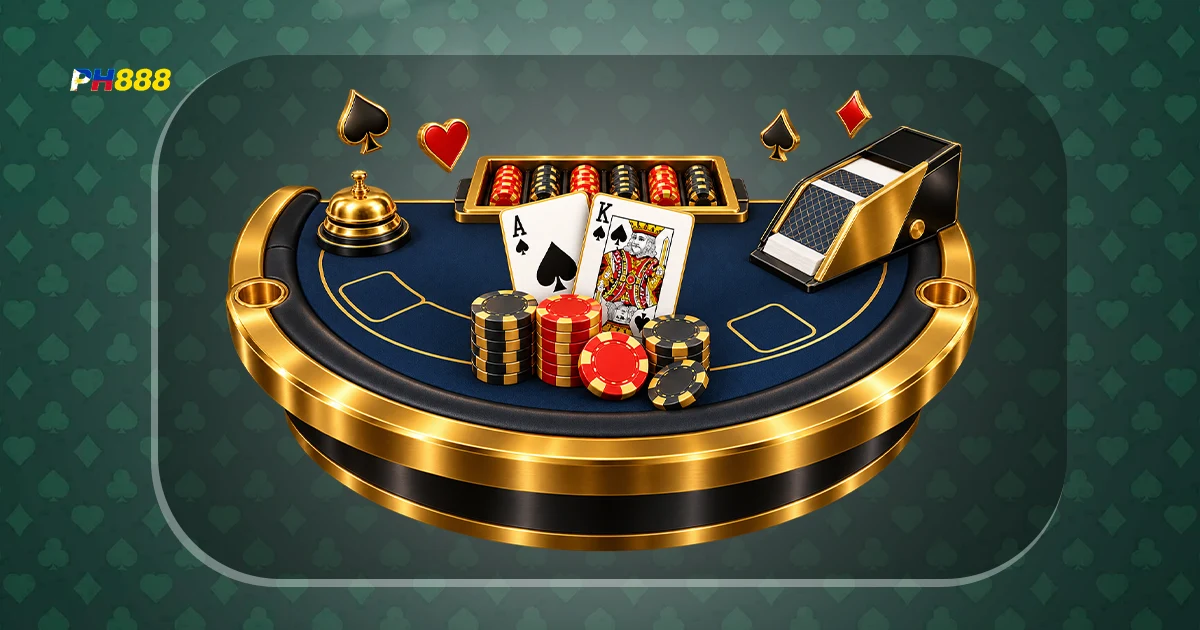
Blackjack is a card game where players compete against the dealer to get as close to 21 as possible without going over.
Players can choose to hit, stand, double down, split, or take insurance depending on the game's rules.
Blackjack is popular because basic strategy can reduce the house edge to a relatively low level compared to many other casino games.
Different variants may have slightly different rules, including the number of decks, dealer standing rules, and payout for a natural blackjack.
Roulette
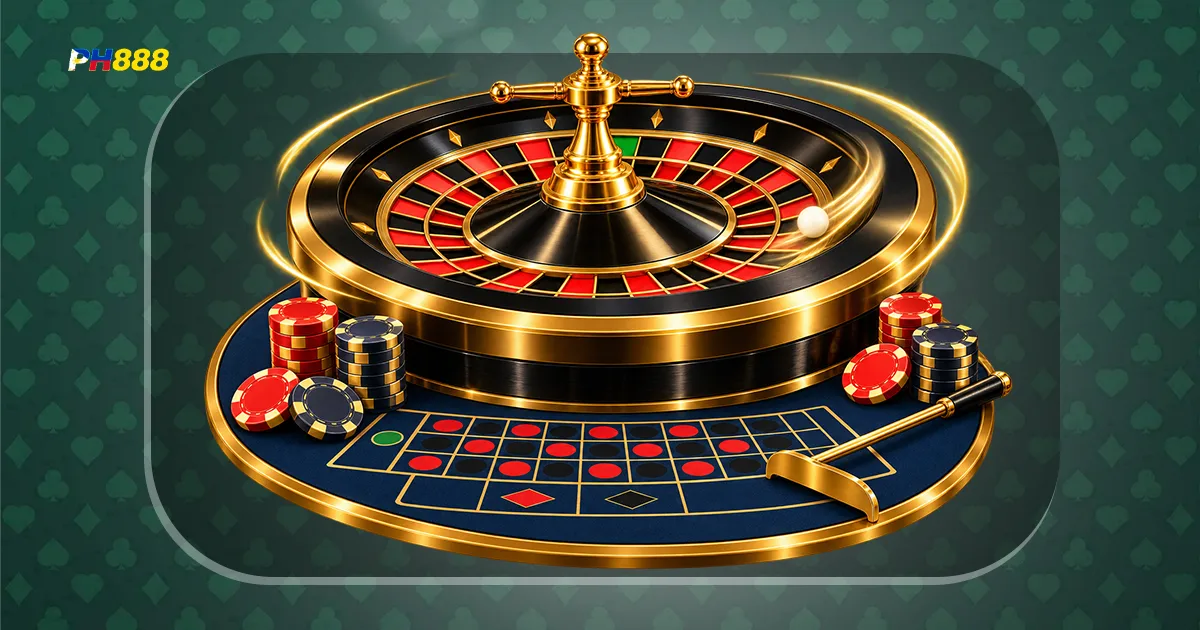
Roulette is a classic casino game where a ball is spun on a numbered wheel.
Players bet on where the ball will land — specific numbers, colors, odd/even, or groups of numbers.
The main variants are European roulette (single zero), American roulette (double zero), and French roulette (with special rules like La Partage and En Prison).
European roulette generally has a lower house edge than American roulette because it has only one zero.
Baccarat
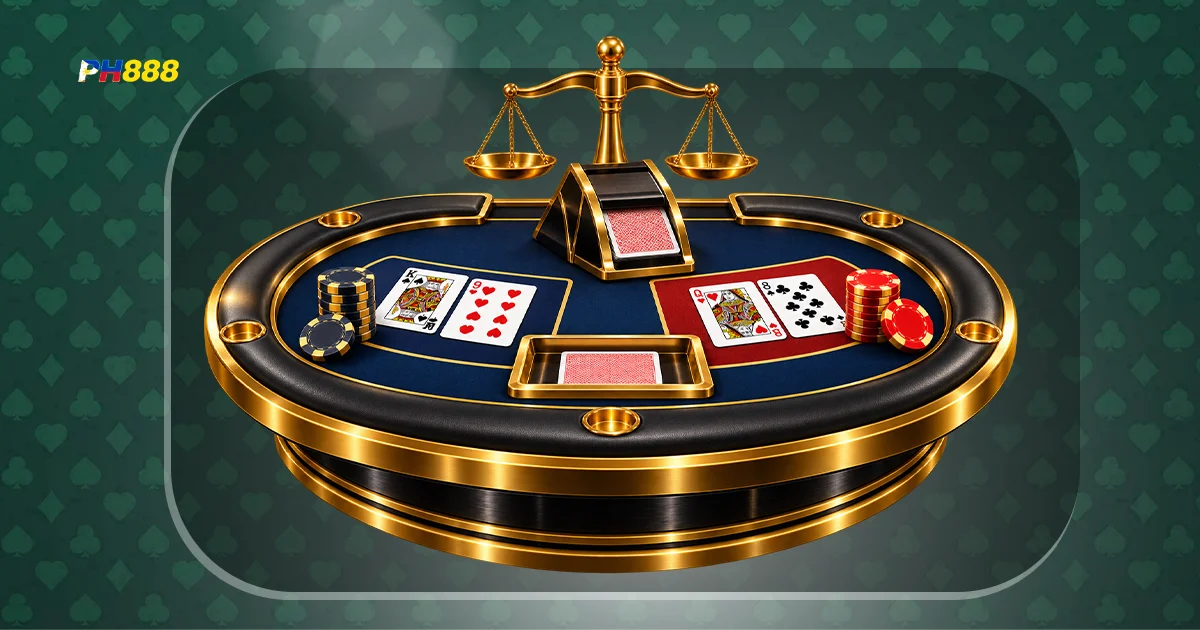
Baccarat is one of the most popular table games, especially in Asian markets.
Players bet on either the Player hand, the Banker hand, or a Tie. The dealer deals cards according to fixed rules, and the hand closest to 9 wins.
Baccarat is known for its simple rules and relatively low house edge on Banker and Player bets.
Many platforms offer baccarat tables with statistics, roadmaps, and betting history.
Poker
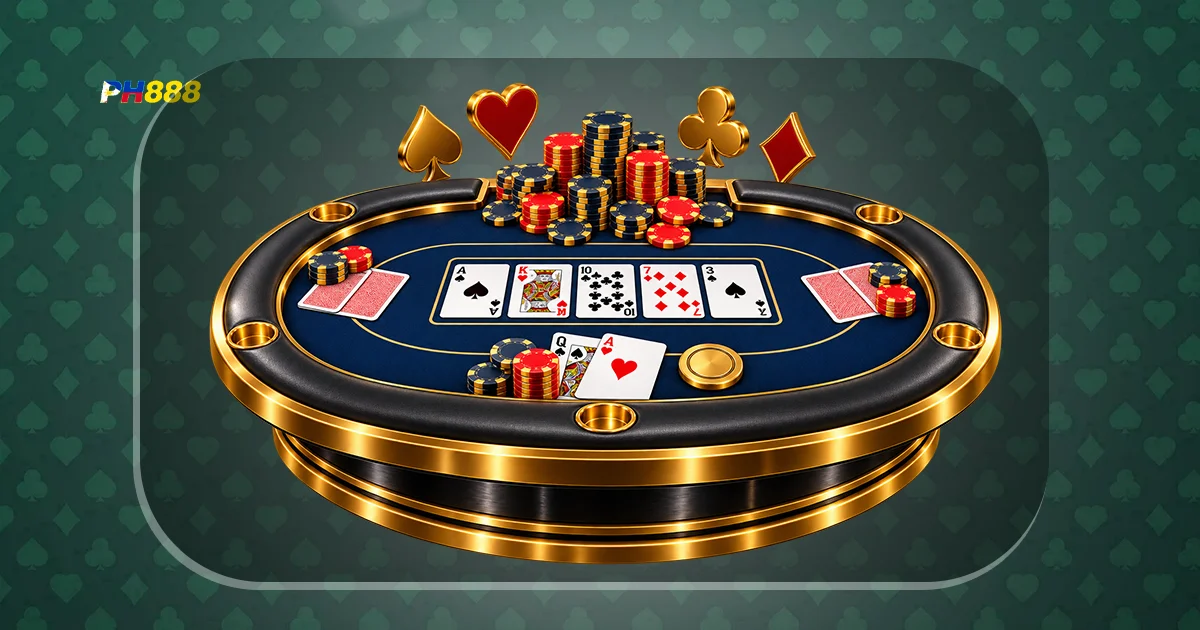
Poker comes in many forms, including video poker and table poker variants like Casino Hold'em and Caribbean Stud.
In video poker, players are dealt cards and choose which to keep or discard, aiming to form the best possible hand.
In table poker variants, players compete against the dealer rather than against each other.
Strategy plays an important role in poker, but outcomes still depend on the cards dealt.
Sic Bo
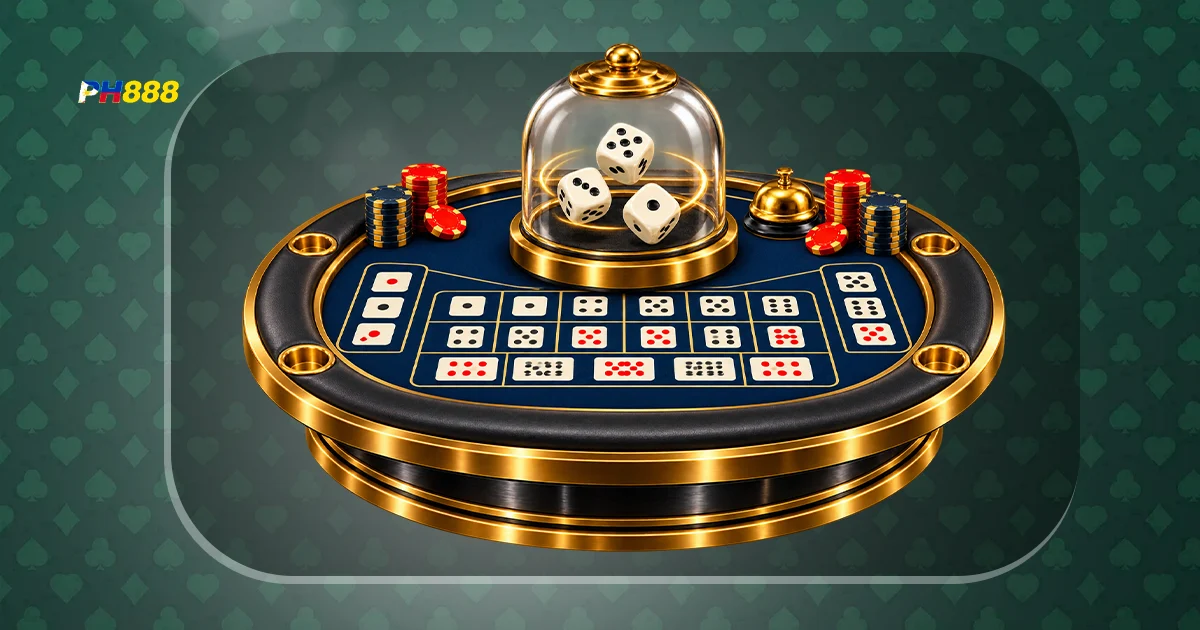
Sic Bo is an ancient dice game that is popular in live casino studios, particularly in Asian markets.
Players bet on the outcome of three dice rolled by the dealer. Bets can be placed on specific numbers, combinations, totals, or odd/even results.
The game offers a wide range of betting options with varying payout odds.
Dragon Tiger
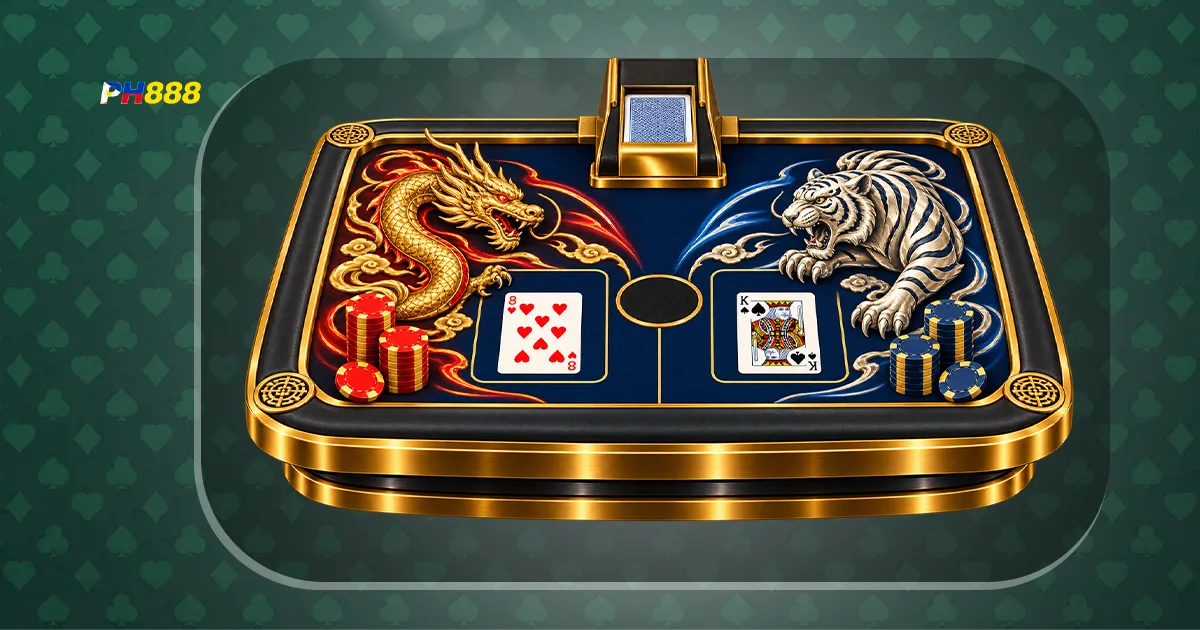
Dragon Tiger is a fast-paced card game that is similar to baccarat but simpler.
Players bet on whether the Dragon hand or the Tiger hand will have the higher card.
Each hand receives one card, and the higher card wins. Ties are possible and usually result in a push or a separate Tie bet.
The game is known for its quick rounds and straightforward rules.
5. Understanding House Edge
The house edge is one of the most important concepts in table games.
It represents the mathematical advantage the casino has over the player over a large number of bets.
For example, a game with a 2% house edge is designed around a long-run return of 98 units for every 100 units wagered, leaving a theoretical 2% difference for the house.
House Edge Varies by Game
Different table games have different house edges. Even within the same game, different bets can have different house edges.
| Game | Typical House Edge (Approximate) |
|---|---|
| Blackjack (with basic strategy) | 0.5% – 1% |
| Baccarat (Banker bet) | ~1.06% |
| Baccarat (Player bet) | ~1.24% |
| European Roulette | ~2.7% |
| American Roulette | ~5.26% |
| Baccarat (Tie bet) | ~14% |
These figures are approximate and can vary depending on the specific rules of the game and the platform.
Understanding the house edge can help you compare games and choose bets that align with your preferences.
House Edge Is Not a Prediction
The house edge describes the mathematical design of the game over a very large number of bets.
It does not predict the outcome of any individual session. A player could win several hands in a row or lose several hands in a row regardless of the house edge.
6. Basic Strategy Concepts
Some table games, particularly blackjack and poker, involve decisions that can affect the house edge.
Understanding basic strategy can help you make more informed decisions, but it cannot guarantee a profit.
Blackjack Basic Strategy
Basic strategy in blackjack is a mathematically derived set of decisions for every possible hand combination.
It tells you whether to hit, stand, double down, or split based on your hand and the dealer's visible card.
Following basic strategy can reduce the house edge to less than 1% in many blackjack variants.
Poker Strategy
In video poker and table poker variants, strategy involves choosing which cards to keep or discard, or whether to raise or fold.
Optimal strategy can vary by game and paytable. Understanding the paytable is essential for making informed decisions.
Roulette and Baccarat Strategy
Roulette and baccarat are games of pure chance. There is no strategy that can change the house edge or predict the next outcome.
Betting systems like Martingale or Fibonacci do not change the mathematical expectation of the game. They only change the pattern of wins and losses.
Strategy Cannot Guarantee Profit
No strategy can guarantee a profit in any table game.
Strategy can help manage risk and reduce the house edge in some games, but outcomes remain based on chance.
7. Table Games and Philippine Regulation
The Philippine gaming environment is regulated by the Philippine Amusement and Gaming Corporation (PAGCOR).
PAGCOR states that it licenses and regulates gaming operations in the Philippines. Its Electronic Gaming Licensing Department regulates local electronic gaming operations, including electronic casino games, electronic bingo, sports betting, and other gaming categories.
Why Regulation Matters
Regulation is important because a legitimate gaming environment requires more than simply placing casino games on a website.
PAGCOR's regulatory materials address areas including:
- Gaming systems
- Game approval
- RNG requirements
- Game integrity
- Technical standards
- Reporting
- Responsible gaming
- Operator and service-provider requirements
PAGCOR's electronic gaming regulations state that gaming systems and games must be credible and reliable, capable of being audited, and operated correctly. They also provide for approval of the electronic gaming system and game contents before deployment.
Check the Operator, Not Just the Logo
A PAGCOR logo displayed on a website should not by itself be treated as proof that the website is authorized.
Players should verify the operator and domain through official regulatory information where possible.
This is especially important because PAGCOR has publicly warned consumers about unauthorized online gaming websites and has emphasized the need to patronize legitimate and authorized platforms.
Regulation Can Change
Gaming regulations are not static.
Rules, approved operators, domains, payment controls, technical requirements, and player-protection measures can change over time.
For that reason, current information should always be checked against official PAGCOR announcements and regulatory resources rather than relying on an old article, social media post, or screenshot.
8. Payment Methods Commonly Used by Filipino Players
Payment options are an important part of the online gaming experience, but availability depends on the specific operator and the rules currently applicable to that platform.
Common payment categories encountered by Filipino users may include:
- E-wallets
- Bank transfers
- Other approved electronic payment channels
GCash and Maya are widely recognized Philippine digital payment brands, but players should not assume that every gaming platform supports them or that deposits and withdrawals will always be processed instantly.
Why Payment Processing Can Vary
Transaction timing can depend on:
- Operator processing
- Account verification
- Payment-provider requirements
- Banking schedules
- Transaction limits
- Security checks
- Regulatory controls
- Maintenance or technical issues
PAGCOR has also introduced stronger controls around online gaming payment channels. In 2025, PAGCOR discussed the delinking of e-wallets and certain payment channels as part of measures intended to improve traceability, strengthen anti-money-laundering protections, and improve player protection.
Therefore, old articles claiming that a particular payment method is always available or always instant may no longer accurately describe the current environment.
Before Making a Deposit
Check:
- Whether the payment method is currently supported.
- Minimum and maximum transaction limits.
- Deposit and withdrawal conditions.
- Verification requirements.
- Any applicable fees.
- The operator's current transaction instructions.
Never provide payment credentials or personal information to an unofficial third party claiming to process a gaming transaction.
9. How to Evaluate a Table Game
Choosing a table game should involve more than selecting the most attractive table.
A few basic pieces of information can help you understand the game before committing money.
Check the Rules
Each table game has its own rules. Blackjack, roulette, baccarat, poker, sic bo, and dragon tiger all work differently.
Read the rules and understand the betting options before placing a bet.
Check the House Edge
Different games and different bets within those games have different house edges.
For example, in baccarat, the Banker bet typically has a lower house edge than the Tie bet. In roulette, European roulette generally has a lower house edge than American roulette.
Understanding the house edge can help you compare options.
Check the Bet Limits
Table games have minimum and maximum bet limits.
Make sure you understand the limits before joining a table. Some tables cater to high rollers, while others have lower minimums for casual players.
Understand the Payouts
Different bets within a game pay different amounts.
Check the payout table to understand how much you can win on each bet type.
Evaluate the Operator
The game itself is only one part of the equation.
Before depositing, consider whether the platform is legitimately authorized for the market in which you are playing and whether it provides clear information about its terms, account procedures, and responsible-gaming policies.
10. Responsible Play
Table games should be treated as entertainment rather than as a reliable way to make money.
Because outcomes are based on chance, players should never depend on gambling to pay bills, cover essential expenses, or solve financial problems.
PAGCOR's responsible-gaming guidance recommends treating gambling as entertainment, setting time and money limits, expecting losses, avoiding borrowed money, and avoiding attempts to chase losses.
Set a Budget Before Playing
Decide how much money you can comfortably afford to lose before starting.
Once that amount is reached, stop.
Do not increase the budget simply because the session has not gone as expected.
Set a Time Limit
Long sessions can make it easier to lose track of spending.
A predetermined time limit creates a clear stopping point.
Do Not Chase Losses
One of the most dangerous habits is trying to recover a previous loss by increasing bets.
A losing session does not create an obligation for the next round to produce a win.
Never Borrow to Gamble
Money needed for:
- Food
- Rent
- Utilities
- Education
- Debt payments
- Family expenses
should not be used for gambling.
Watch for Warning Signs
PAGCOR identifies signs of problematic gambling that include spending more than intended, gambling longer than planned, repeatedly attempting to recover losses, developing financial problems, and thinking about gambling excessively.
If gambling begins affecting work, relationships, finances, or everyday responsibilities, taking a break and seeking help is more important than trying to recover losses.
Self-Exclusion
PAGCOR provides self-exclusion and banning programs for people who believe they are developing a gambling problem. Its current information describes exclusion periods of six months, one year, and five years, subject to the applicable process and conditions.
Responsible gambling is not about finding a betting system that guarantees winning. It is about maintaining control over how much time and money you spend.
11. Frequently Asked Questions
What are table games?
Which table game has the lowest house edge?
Can strategy guarantee a win at table games?
What is the difference between European and American roulette?
Is baccarat a game of skill or chance?
Can I play table games on mobile?
Are RNG table games fair?
What is the house edge in sic bo?
Can I use a betting system like Martingale?
How can I check whether an online gaming platform is legitimate?
12. Final Takeaway
Table games offer a different experience from slots. They often involve decisions, strategy, and a deeper understanding of the game's rules and probabilities.
The important concepts are straightforward:
- Table games include blackjack, roulette, baccarat, poker, craps, sic bo, dragon tiger, and more.
- RNG and live dealer formats offer different experiences — software-based or real dealer.
- House edge varies by game and bet type — understanding it can help you compare options.
- Strategy can reduce the house edge in some games like blackjack, but cannot guarantee a profit.
- Regulation provides an important layer of oversight for authorized gaming operations, systems, and player-protection measures.
- Responsible play keeps gambling within an entertainment budget rather than treating it as a source of guaranteed income.
For players in the Philippines, checking the current regulatory status of a gaming platform is particularly important because online gaming rules and safeguards can change. PAGCOR continues to update its regulatory framework and responsible-gaming measures as the electronic gaming sector develops.
Ultimately, there is no secret system that can turn a table game into a predictable source of profit. The more practical approach is to understand the game's rules, know the house edge, verify the platform you use, set limits before playing, and recognize that every wager carries the possibility of losing money.
Play only for entertainment, use money you can afford to lose, and stop when your predetermined limit is reached.
Ready to Play Table Games at PH888?
Enjoy blackjack, roulette, baccarat, poker, and more. Play responsibly and enjoy the thrill of the table.
21+ only · Play responsibly · Terms apply